Audio Summary
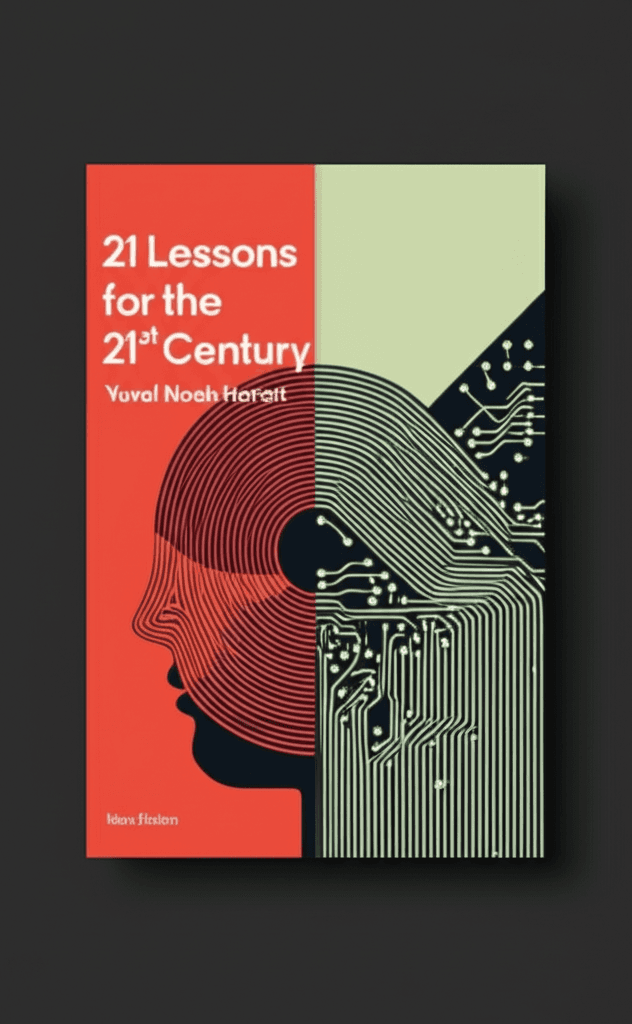
21 Lessons for the 21st Century
Yuval Noah Harari•Updated 2026
Technological Disruption & AIThe Power of StoriesGlobalism vs. Nationalism
Back to Library
Executive Summary
Published in 2018, '21 Lessons for the 21st Century' is Yuval Noah Harari's follow-up to his historical and futuristic epics, 'Sapiens' and 'Homo Deus'. Unlike its predecessors, this book focuses on the immediate present, exploring 21 urgent challenges facing humanity today. The book is structured into five parts: The Technological Challenge, The Political Challenge, Despair and Hope, Truth, and Resilience. Harari examines how global forces like artificial intelligence, climate change, and the 'post-truth' era are disrupting traditional narratives and social structures, ultimately advocating for clarity and mental resilience through tools like meditation (getstoryshots.com, readingraphics.com).
Key Themes
Technological Disruption & AI
Harari explores how AI and biotechnology are reshaping the economy and the human experience. He warns that humans risk becoming 'irrelevant' as algorithms take over decision-making and automation replaces even cognitive-based jobs (getstoryshots.com, richardblackaby.com).
The Power of Stories
A recurring theme is that humans are storytelling animals who organize society around shared fictions like nations, religions, and money. Harari argues that current stories (like liberalism) are failing, leaving a void of meaning (nodesk.co, obedientparla.com).
Globalism vs. Nationalism
The book posits that problems like ecological collapse and nuclear war are global and cannot be solved by individual nations. Harari suggests that while nationalism has historical utility, 'global problems need global answers' (readingraphics.com, obedientparla.com).
Post-Truth and Information Overload
In an era of 'fake news,' Harari argues that clarity is power. He suggests that humans have always lived in a post-truth world—relying on myths to cooperate—but the current technological amplification of lies poses a new existential threat (nodesk.co, goodreads.com).