Audio Summary
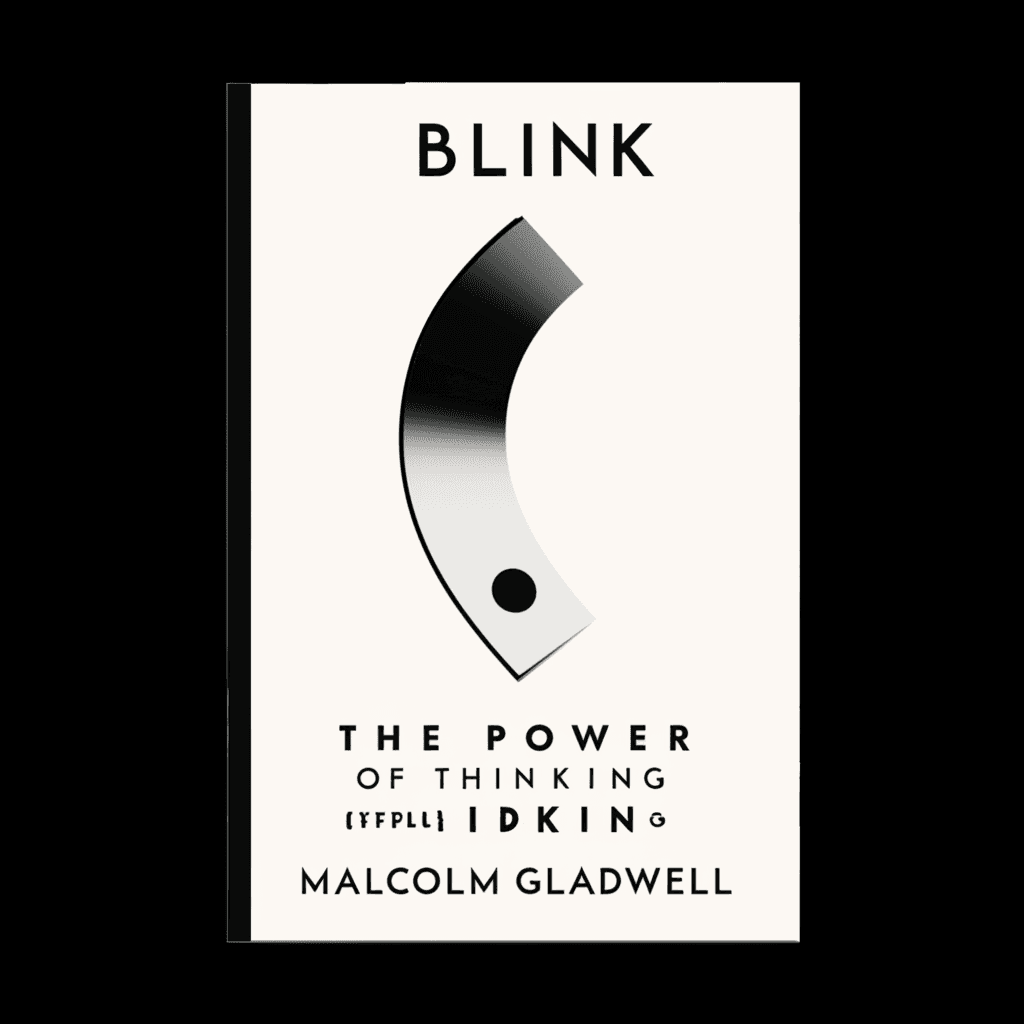
Blink: The Power of Thinking Without Thinking
Malcolm Gladwell•Updated 2026
Thin-SlicingExpert IntuitionThe Warren Harding Error
Back to Library
Executive Summary
Blink: The Power of Thinking Without Thinking (2005) explores the 'adaptive unconscious'—the mental processes that allow humans to make rapid, automatic decisions with very little information. Gladwell argues that these snap judgments, or 'thin-slicing,' can often be more accurate than prolonged, deliberate analysis, particularly when practiced by experts. However, he also examines the pitfalls of this system, such as unconscious bias and the 'Warren Harding Error,' where superficial cues lead to disastrously wrong conclusions. The book uses a series of case studies—from art forgery detection to the Amadou Diallo shooting—to illustrate when to trust our instincts and when to be wary of them (Wikipedia, NIH).
Key Themes
Thin-Slicing
The ability of the unconscious mind to find significant patterns in 'thin slices' of experience or narrow windows of time (Wikipedia).
Expert Intuition
Gladwell posits that snap judgments are most reliable when they are the result of years of training and experience, allowing experts to ignore 'white noise' and focus on critical details (The Power Moves).
The Warren Harding Error
A term used to describe the dark side of first impressions, where people make incorrect snap judgments based on superficial physical traits, such as associating height and appearance with leadership capability (Shortform).
Information Overload
The idea that 'less is more'; having too much data can actually paralyze decision-making and lead to worse outcomes than a simple, intuitive approach (NIH).