Audio Summary
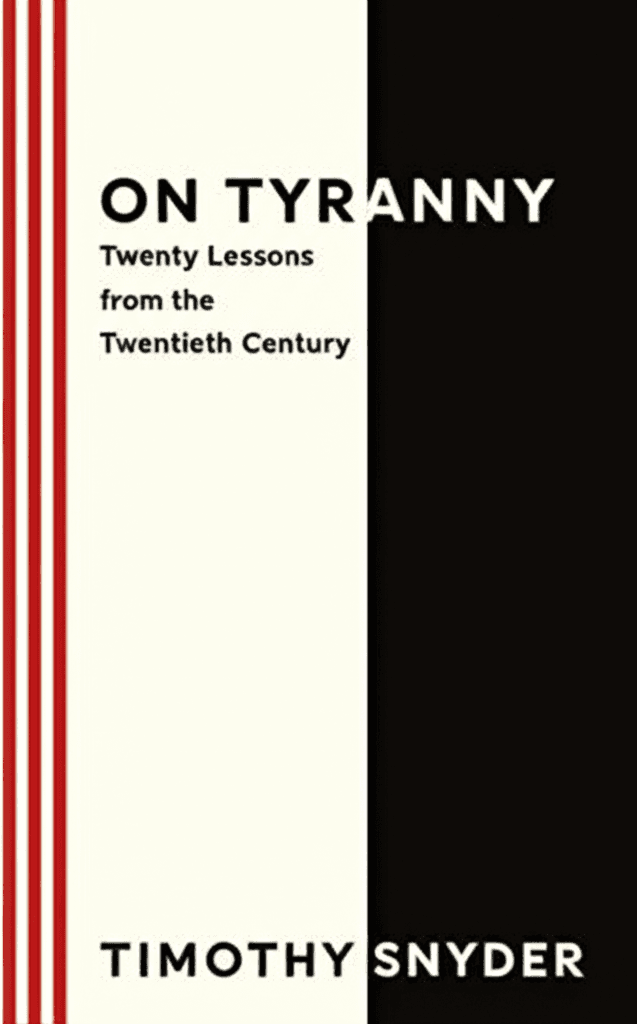
On Tyranny: Twenty Lessons from the Twentieth Century
Timothy Snyder•Updated 2026
Anticipatory ObedienceThe Defense of InstitutionsThe Ethics of Language and Truth
Back to Library
Executive Summary
Published in 2017 shortly after the U.S. presidential election, 'On Tyranny' is a concise, 128-page 'manual for resistance' by historian Timothy Snyder. It distills 20 specific lessons from the collapse of 20th-century democracies (specifically focusing on Nazi Germany and the Soviet Union) into practical advice for modern citizens. Snyder argues that history does not repeat but 'does instruct,' suggesting that the fragility of contemporary democracy requires active, individual defenses to prevent a slide into authoritarianism (Sources: timothysnyder.org, The Guardian).
Key Themes
Anticipatory Obedience
The idea that most power in an authoritarian regime is freely given by citizens who 'think ahead' to what a repressive government wants and adapt before being asked. Snyder calls this a 'political tragedy' (Source: timothysnyder.org).
The Defense of Institutions
Snyder argues that institutions (courts, media, labor unions) do not protect themselves; they require citizens to actively support and occupy them to maintain their integrity against overreach (Source: LA Review of Books).
The Ethics of Language and Truth
Emphasizes that 'Post-truth is pre-fascism.' Snyder argues that the erosion of shared facts makes it impossible for a public to criticize power, as all discourse becomes mere spectacle (Source: Goodreads, The Guardian).
Terror Management
A warning that tyrants use 'unthinkable' events or emergencies to suspend civil liberties. He cites the 1933 Reichstag fire as a template for how regimes consolidate power through fear (Source: SparkNotes).