Audio Summary
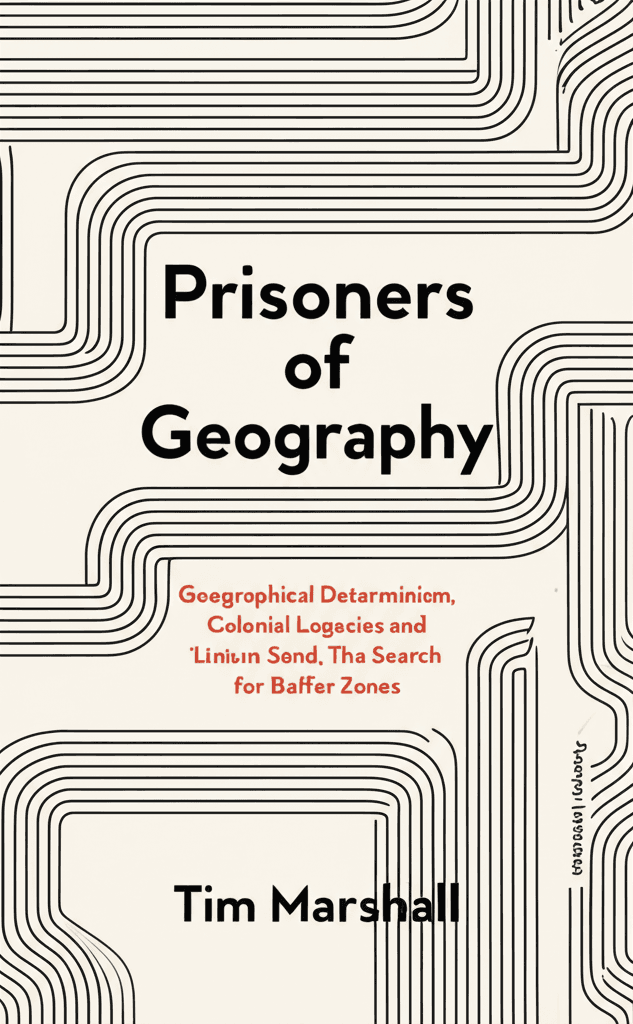
Prisoners of Geography
Tim Marshall•Updated 2026
Geographical DeterminismColonial Legacies and 'Lines in the Sand'The Search for Buffer Zones
Back to Library
Executive Summary
Published in 2015, 'Prisoners of Geography' by Tim Marshall posits that physical geography—mountains, rivers, seas, and climate—is the primary driver of international relations and national destiny. Marshall argues that despite technological advances, global leaders are often 'imprisoned' by their terrain, forcing them into predictable strategic decisions to secure borders, trade routes, and resources (The Guardian, 2022). The book is structured around ten distinct maps (Russia, China, USA, Latin America, Middle East, Africa, Europe, Japan/Korea, India/Pakistan, and the Arctic) to illustrate why certain nations thrive as superpowers while others remain trapped in cycles of conflict or poverty.
Key Themes
Geographical Determinism
The central idea that a nation's landscape limits its choices. For example, Russia's lack of warm-water ports and its flat western border (the North European Plain) are seen as permanent strategic vulnerabilities that dictate its foreign policy (Reddit; The Guardian, 2022).
Colonial Legacies and 'Lines in the Sand'
Marshall explores how arbitrary borders drawn by European colonial powers in Africa and the Middle East ignored ethnic and geographical realities, leading to modern instability (ResearchGate, 2023).
The Search for Buffer Zones
Nations often seek 'strategic depth' or buffer zones to protect their heartlands, such as China’s occupation of Tibet to maintain the 'Water Tower' of Asia and create a barrier against India (Medium, 2021).
Resource and Trade Security
Access to natural resources like oil, gas, and arable land, along with the ability to control key maritime 'chokepoints' (like the Strait of Malacca), is a critical component of national power (Goodreads).