Audio Summary
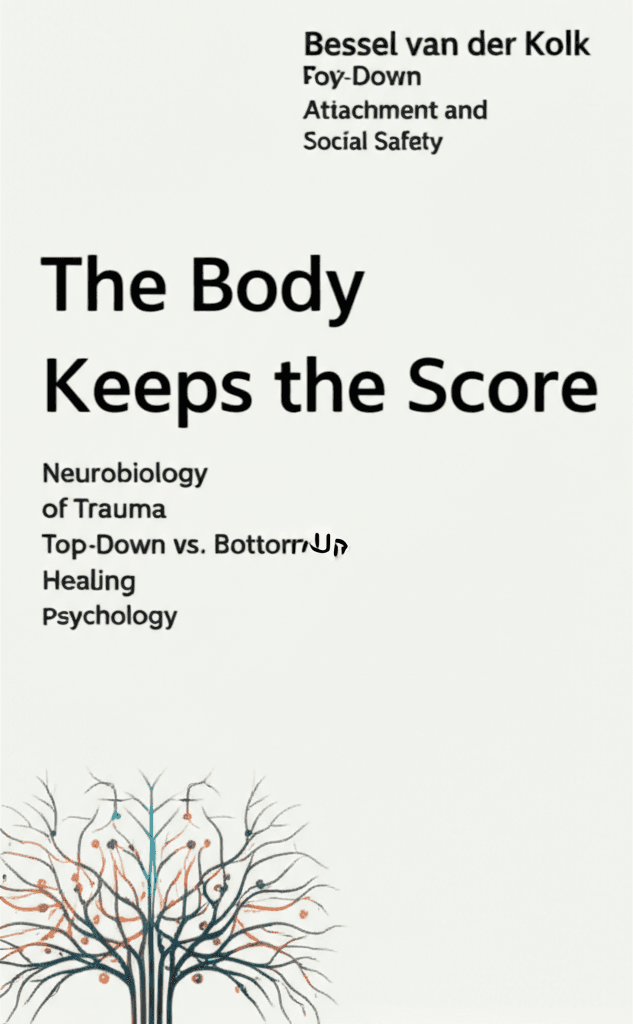
The Body Keeps the Score
Bessel van der Kolk•Updated 2026
The Neurobiology of TraumaTop-Down vs. Bottom-Up HealingAttachment and Social Safety
Back to Library
Executive Summary
First published in 2014, 'The Body Keeps the Score' is a seminal work in the field of psychology that explores how trauma reshapes both the brain and the body. Dr. Bessel van der Kolk argues that traumatic experiences are not just stored as memories in the mind but are physically 'imprinted' on the nervous system and viscera, leading to chronic physical and emotional symptoms. The book integrates neuroscience, developmental psychopathology, and interpersonal neurobiology to propose a 'bottom-up' approach to healing that moves beyond traditional talk therapy (NIH, Wikipedia).
Key Themes
The Neurobiology of Trauma
Trauma affects brain structures like the amygdala (the alarm system), the hippocampus (memory processing), and the prefrontal cortex (rational thought), often leaving survivors in a state of chronic hypervigilance (NIH, simplypsychology.org).
Top-Down vs. Bottom-Up Healing
Van der Kolk posits that while talk therapy (top-down) has value, 'bottom-up' approaches like yoga, EMDR, and neurofeedback are essential to reset the body's physiological survival responses (NIH, besselvanderkolk.com).
Attachment and Social Safety
Human beings are biologically wired for connection; trauma often ruptures the ability to feel safe with others, making the restoration of secure relationships a cornerstone of recovery (sparknotes.com).