Audio Summary
The Happiness Hypothesis
Jonathan Haidt•Updated 2026
The Divided Self (Rider and Elephant)The Adaptation PrincipleHappiness Comes from Between
Back to Library
Executive Summary
Published in 2006, 'The Happiness Hypothesis' is a synthesis of ancient philosophical wisdom and modern psychological research. Social psychologist Jonathan Haidt examines ten 'Great Ideas'—ranging from the teachings of Buddha and Epictetus to the insights of Benjamin Franklin—and evaluates them through the lens of contemporary neuroscience and positive psychology. The book's central premise is that happiness is not a single target but a result of getting the 'conditions right' across different areas of life, ultimately arguing that happiness comes 'from between'—the intersection of internal mindset and external relationships.
Key Themes
The Divided Self (Rider and Elephant)
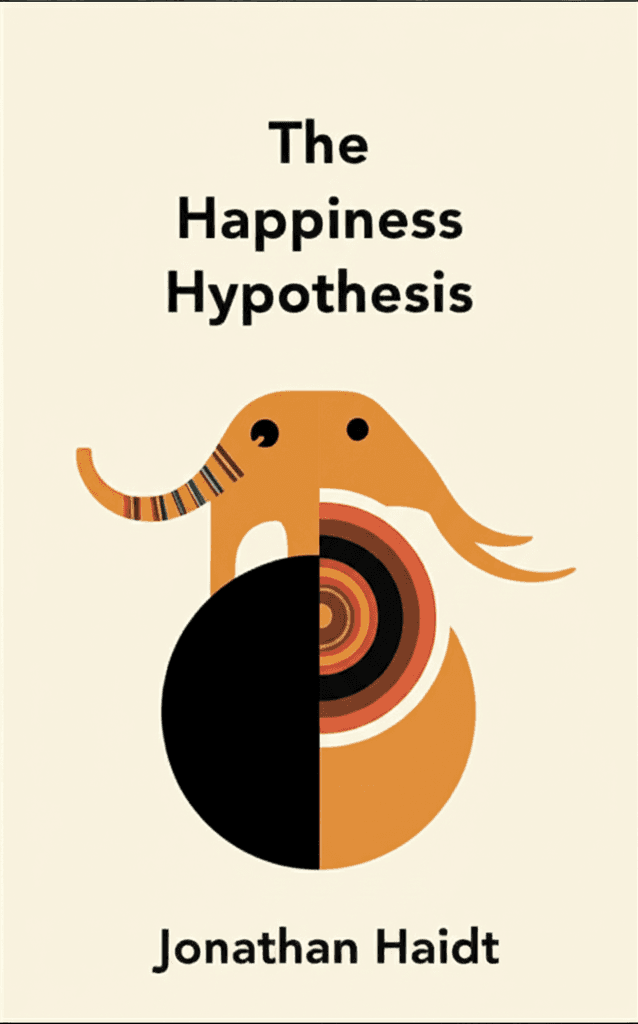
Haidt uses the metaphor of a rider (conscious reasoning) sitting atop an elephant (automatic/intuitive processes). He argues that while the rider thinks they are in charge, the elephant is much more powerful and often dictates direction, meaning lasting change requires training the emotional 'elephant' rather than just willing the 'rider' to act (Source: Wikipedia, Blinkist).
The Adaptation Principle
This theme explores how humans have a biological 'set point' for happiness. Whether we experience great fortune or tragedy, we eventually return to a baseline level of happiness. Haidt notes this makes pursuing external achievements for happiness a 'hedonic treadmill' (Source: Medium, Learn Do Grow).
Happiness Comes from Between
Haidt concludes that happiness isn't just found inside (as Buddha suggested) or outside (through worldly success), but emerges from the right relationship between the self and others, the self and work, and the self and something larger than the self (Source: ResearchGate, happinesshypothesis.com).
Reciprocity and Ultra-sociality
Humans are unique 'ultra-social' animals whose societies are built on deep-seated instincts for reciprocity. Haidt argues that understanding these instincts is key to navigating social life and building the strong relationships essential for well-being (Source: Best Writing Jobs).