Audio Summary
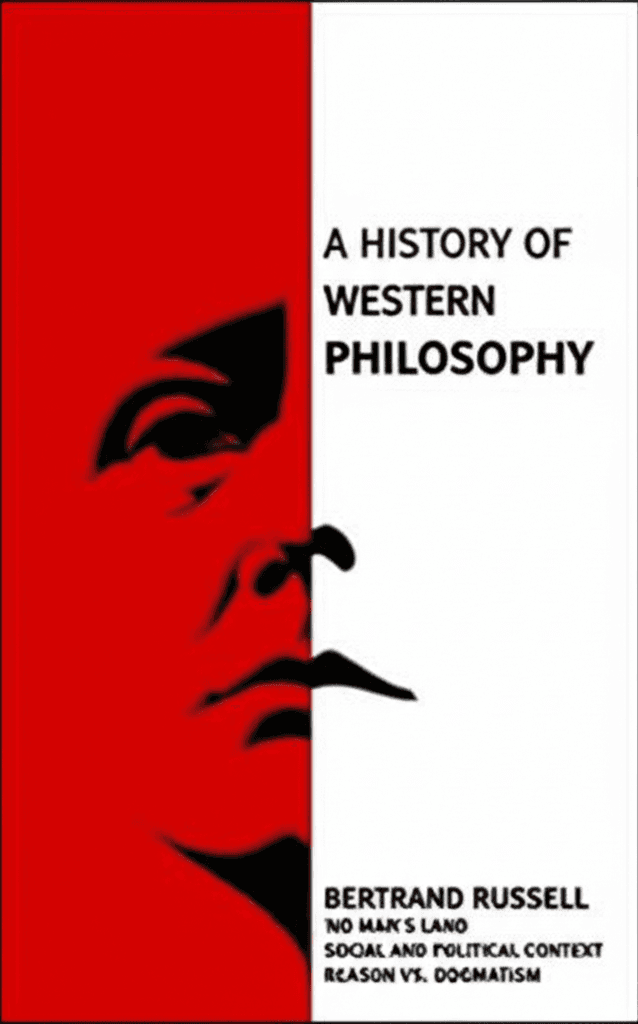
A History of Western Philosophy
Bertrand Russell•Updated 2026
Philosophy as 'No Man's Land'Social and Political ContextReason vs. Dogmatism
Back to Library
Executive Summary
First published in 1945, Bertrand Russell's 'A History of Western Philosophy' is a sweeping survey of philosophical thought from the pre-Socratics to the early 20th century. Unlike traditional academic histories, Russell's work functions as a 'social history,' attempting to exhibit philosophy as an integral part of social and political life rather than isolated speculation. The book was a massive commercial success, providing Russell with lifelong financial security and serving as a primary citation for his 1950 Nobel Prize in Literature. It is celebrated for its wit, accessibility, and the distinct, often acerbic voice of one of the century's greatest logicians.
Key Themes
Philosophy as 'No Man's Land'
Russell famously defines philosophy as the intermediate space between theology (dogma) and science (definite knowledge), appealing to human reason rather than authority (Source: Lone Wong, Wordpress; Wikipedia).
Social and Political Context
The book emphasizes that philosophers are both products and causes of their social environments, with entire chapters dedicated to historical developments like the Roman Empire or the Papacy to contextualize the thought of the era (Source: alandotchin.com; McMaster University).
Reason vs. Dogmatism
A recurring theme is the conflict between individual liberty and social cohesion, and the praise of logical analysis over metaphysical or religious dogma (Source: Blinkist; Wikipedia).