Audio Summary
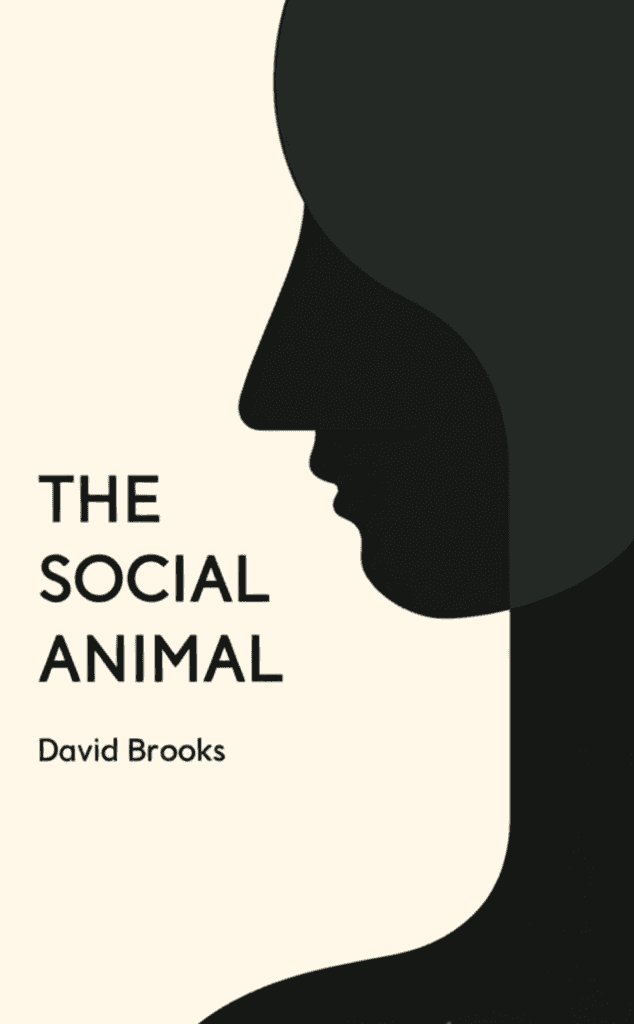
The Social Animal
David Brooks•Updated 2026
The Power of the UnconsciousRelationships as the Foundation of HappinessCharacter vs. IQ
Back to Library
Executive Summary
Published in 2011, 'The Social Animal' is a hybrid work that blends a fictional narrative with non-fiction scientific commentary. It follows the lives of two composite characters, Harold and Erica, from conception to death. David Brooks uses their life stories as a framework to synthesize research from neuroscience, psychology, sociology, and behavioral economics. The book's central premise is that our lives are driven by an 'inner mind'—a vast, unconscious realm of emotions, intuitions, and social biases—rather than the rational, conscious deliberation we often prioritize. Brooks argues that human flourishing is not determined by IQ or material success, but by our ability to form deep social bonds and develop 'noncognitive' skills like character and empathy.
Key Themes
The Power of the Unconscious
Brooks posits that the unconscious mind is not a dark, Freudian reservoir of repressed desires, but a 'creative and enchanted' space where most of the brain's heavy lifting occurs, including decision-making and character formation (Source: New York Times, Goodreads).
Relationships as the Foundation of Happiness
A recurring theme is that social connections are the most significant predictor of health and happiness. Brooks emphasizes the 'urge to merge,' asserting that humans are hardwired for connection and that isolation leads to a 'loneliness loop' (Source: The Guardian, The Power Moves).
Character vs. IQ
The book challenges the modern obsession with SAT scores and IQ, suggesting that success is more closely tied to 'noncognitive' traits such as persistence, self-control, and the ability to read social cues (Source: Medium, Wikipedia).
The Failure of Rationalism
Brooks critiques the 'Rationalist Path'—the idea that humans are primarily logical actors who can be improved through purely technical or bureaucratic social policies (Source: The Guardian).