Audio Summary
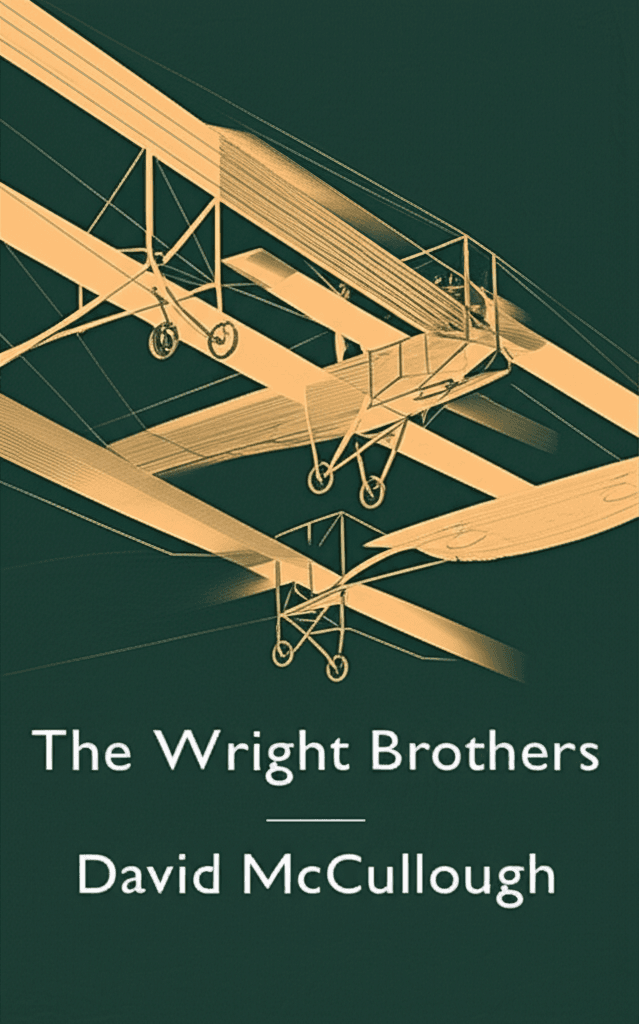
The Wright Brothers
David McCullough•Updated 2026
Intellectual Curiosity and Self-EducationPersistence and Systematic Problem-SolvingFamily Solidarity
Back to Library
Executive Summary
Published in 2015, 'The Wright Brothers' by David McCullough is a narrative biography that chronicles the lives of Wilbur and Orville Wright, from their modest beginnings as bicycle mechanics in Dayton, Ohio, to their historic first powered flight at Kitty Hawk in 1903. McCullough focuses heavily on the brothers' personal characters, their family dynamics—particularly the influence of their father, Bishop Milton Wright, and their sister, Katharine—and the intellectual curiosity that drove them to solve the problem of flight where better-funded scientists had failed. The book is known for its evocative storytelling, drawing on thousands of family letters and diaries to paint a vivid picture of their persistence and the cultural landscape of early 20th-century America (Source: The New York Times, Goodreads).
Key Themes
Intellectual Curiosity and Self-Education
McCullough emphasizes that despite neither brother having a college degree, they were profoundly well-educated through a home environment that prioritized reading and questioning (Source: SuperSummary).
Persistence and Systematic Problem-Solving
The narrative details their iterative process, moving from kites to gliders to powered machines, and their willingness to risk their lives through hundreds of test flights (Source: sajithpai.com).
Family Solidarity
The book highlights the 'Wright family' as a singular unit, showing how their sister Katharine’s social and administrative support was as vital as the brothers' engineering (Source: Smithsonian Magazine).
American Exceptionalism
The story is framed within a broader 'Golden Age' of American invention, suggesting that the era's cultural optimism was a key ingredient in their success (Source: Reddit r/AskHistorians).