Audio Summary
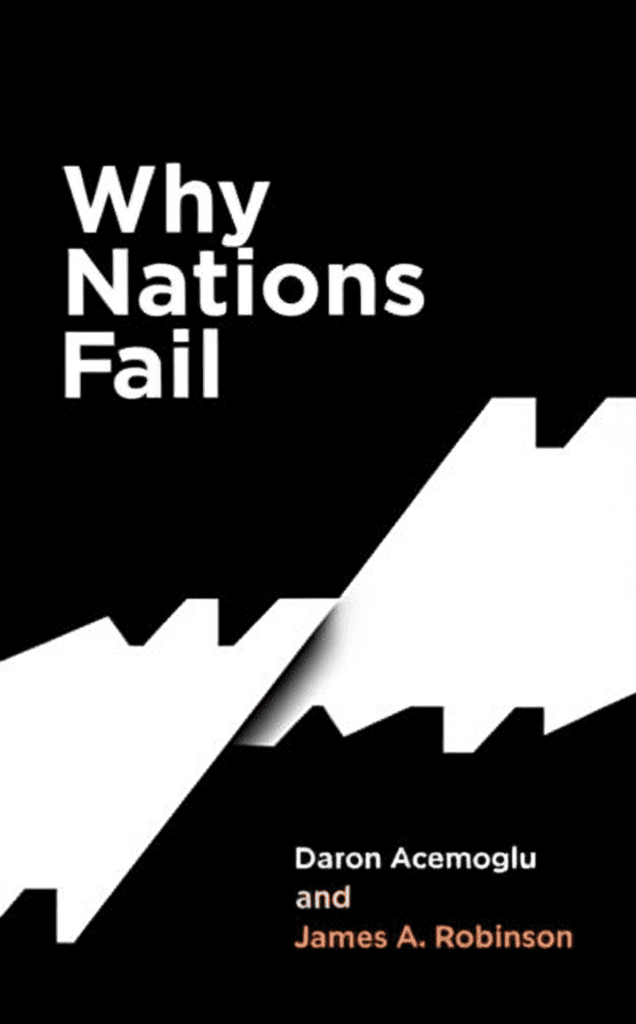
Why Nations Fail
Daron Acemoglu and James A. Robinson•Updated 2026
Inclusive vs. Extractive InstitutionsCritical JuncturesCreative Destruction
Back to Library
Executive Summary
Published in 2012, 'Why Nations Fail' presents a sweeping historical and economic theory to explain the vast disparities in wealth and power among nations. Daron Acemoglu and James A. Robinson argue that the primary driver of prosperity is not geography, climate, or culture, but rather 'institutions.' They distinguish between 'inclusive' institutions (which share power and protect property rights) and 'extractive' institutions (which concentrate power and wealth in the hands of a small elite). Using a wealth of historical examples ranging from the Roman Empire to modern-day Nogales, the book posits that inclusive institutions foster a 'virtuous cycle' of innovation and growth, while extractive ones lead to stagnation and eventual failure.
Key Themes
Inclusive vs. Extractive Institutions
The central framework of the book. Inclusive institutions allow for broad participation and secure property rights, whereas extractive institutions are designed to pull resources from the many to enrich the few (Source: The Guardian, 2012).
Critical Junctures
The authors argue that major historical events (like the Black Death or the Glorious Revolution) act as 'critical junctures' where small institutional differences can lead to vastly different developmental paths (Source: Blinkist Summary).
Creative Destruction
A concept borrowed from Joseph Schumpeter, referring to the process where new innovations replace old technologies and interests. Extractive elites often block this process to maintain their power (Source: Goodreads/LitCharts).
Virtuous and Vicious Cycles
Inclusive institutions tend to reinforce themselves by empowering the public, while extractive ones create a 'vicious cycle' where the elite further consolidate power (Source: Blinkist Summary).